
Raw vs. Cooked Food Nutrition: Why Calories and Protein Change per 100g
Nutrition Guide | FoodnPedia
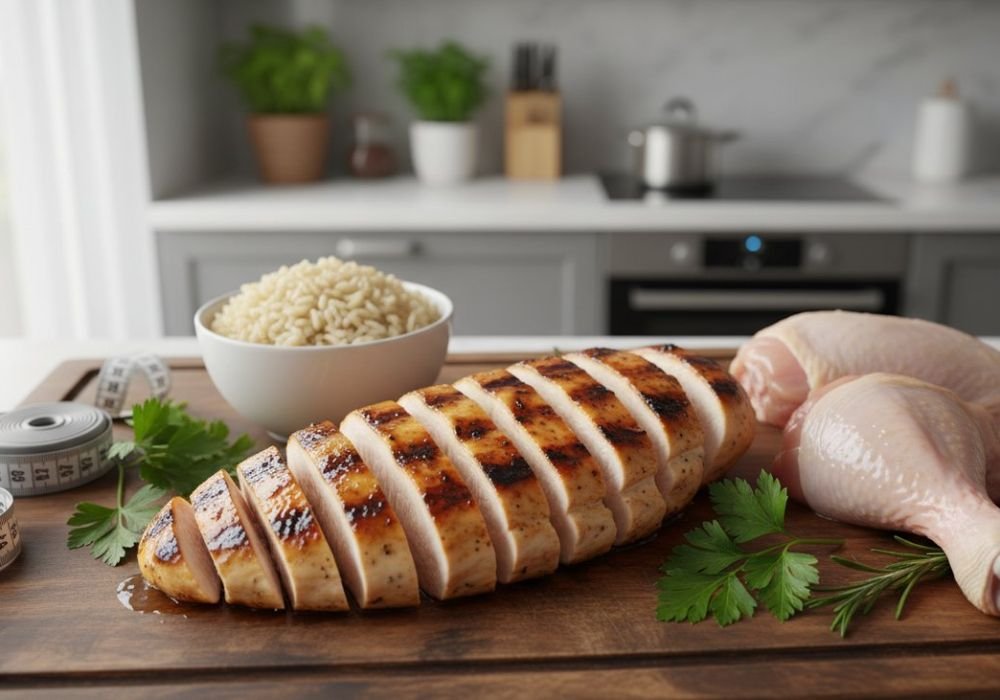
Have you ever searched for the calories in 100 grams of chicken breast and found two completely different answers? One result might describe raw chicken, while another describes chicken after roasting or grilling. Both can be correct.
The same confusion happens with rice, pasta, potatoes, beans, and vegetables. A cup of uncooked rice is not nutritionally equivalent to a cup of cooked rice, and 100 grams of raw chicken is not the same amount of food as 100 grams of cooked chicken.
The explanation is often surprisingly simple: cooking changes food weight, especially its water content. It can also change the amount of certain nutrients retained in the food.
In this guide, you will learn how raw and cooked nutrition values differ, why protein and calories appear to increase or decrease, how to track food accurately, and how to compare foods using the FoodnPedia database.
Quick Answer: Does Cooking Change Calories and Protein?
Cooking does not automatically create extra calories or protein. When meat loses water during cooking, the nutrients become more concentrated per 100 grams. When rice or pasta absorbs water, the nutrients become less concentrated per 100 grams.
However, cooking can also cause real changes. Fat may drain away, oil may be absorbed, and some vitamins can be lost through heat or cooking water.
The most important rule: Match the nutritional database entry to the state in which you weighed the food.
- Weighed chicken before cooking? Use a raw chicken entry.
- Weighed chicken after cooking? Use a cooked chicken entry.
- Weighed dry rice? Use an uncooked rice entry.
- Weighed cooked rice? Use a cooked rice entry.
1. Why Do Nutrition Values Change After Cooking?
Food contains more than protein, carbohydrate, and fat. Water makes up a substantial portion of many foods, and cooking changes the balance between water and other components.
Water loss makes nutrients more concentrated
Imagine starting with 200 grams of raw chicken breast. During cooking, some water evaporates and the chicken becomes lighter.
Suppose the cooked chicken weighs 150 grams. If the original chicken contained 46 grams of protein and all of that protein remained, the same 46 grams would now be distributed across a smaller food weight.
That would mean approximately 23 grams of protein per 100 grams raw, compared with 30.7 grams per 100 grams cooked.
The total protein did not increase in this simplified example. Its concentration per 100 grams increased because the food became lighter.
Water absorption makes nutrients less concentrated
Rice and pasta behave differently. During cooking, they absorb water and become heavier.
For example, suppose 100 grams of dry rice provides 360 calories and increases to 300 grams after cooking, with no meaningful energy lost or added.
Those 360 calories are now distributed across 300 grams of cooked rice, giving approximately 120 calories per 100 grams cooked.
These figures are illustrative, not measurements of a particular rice variety. Actual results depend on the rice, cooking method, and water absorption.
Cooking can also change the actual nutrient amount
Water is not the whole story. Nutrient changes can also result from:
- Fat dripping from meat during roasting or grilling.
- Oil or butter being added during frying or sautéing.
- Water-soluble vitamins entering cooking water.
- Heat-sensitive nutrients being partly degraded.
- Edible portions being removed during preparation.
- Changes in nutrient availability after heating.
This is why a reliable cooked-food entry should reflect the actual preparation method whenever possible.
2. Raw vs. Cooked Food: What Usually Happens?
The following table explains common patterns. It does not imply that every variety or recipe behaves identically.
| Food | Typical weight change | Effect on values per 100g | Important detail |
|---|---|---|---|
| Chicken breast | Often loses water | Protein and calories may appear more concentrated | Added oil, skin and cooking losses matter |
| Beef | Often loses water and sometimes fat | Protein may become concentrated | Fat content and cooking method strongly affect calories |
| Rice | Absorbs water | Calories per 100g generally decrease | Dry and cooked entries are not interchangeable |
| Pasta | Absorbs water | Calories per 100g generally decrease | Cooking time changes final water content |
| Beans | Absorb water during soaking and cooking | Calories per 100g generally decrease versus dry beans | Draining and preparation affect values |
| Spinach | Often loses volume and may lose water | Some nutrients may become more concentrated by weight | Water-soluble vitamins may be lost |
| Potatoes | Depends on method | Can increase or decrease | Boiling, baking and frying produce different results |
For accurate comparisons, use the same basis: either 100 grams of each finished food or equivalent starting amounts of the raw ingredients.
Explore the FoodnPedia food database to find separate records for different foods and preparations.
3. Does Cooked Chicken Have More Protein Than Raw Chicken?
This is one of the most common questions people encounter when tracking protein.
The short answer is that cooked chicken often contains more protein per 100 grams, but that does not mean cooking creates protein.
Worked example: 200g raw chicken
Assume a hypothetical 200-gram raw chicken portion contains 46 grams of protein.
- Starting raw weight: 200g.
- Starting protein: 46g.
- Final cooked weight: 150g.
- Assumed protein retained: 46g.
- Cooked protein concentration: 46 ÷ 150 × 100 = 30.7g per 100g.
The portion still contains 46 grams of protein under these simplified assumptions. The concentration changed because the chicken lost 50 grams of weight.
In real cooking, some nutrients and juices can be lost. The final protein amount is not necessarily identical to the starting amount.
Should you weigh chicken raw or cooked?
Either method can work if you use the matching nutritional entry consistently.
Weighing raw chicken before cooking is often convenient when preparing a recipe. Weighing it after cooking can be more practical for leftovers or prepared meals.
Problems arise when someone weighs 150 grams of cooked chicken but enters 150 grams of raw chicken into a nutrition tracker.
That mismatch can underestimate the nutrients in the cooked portion because the raw entry includes more water.
Practical tip: When comparing chicken products, check whether the record specifies raw, roasted, grilled, skinless, skin-on, or another preparation.
4. Why Does Cooked Rice Have Fewer Calories per 100g?
Rice is an excellent example of how water can change nutrition numbers without removing most of the food’s energy.
Uncooked rice contains relatively little water. During cooking, its starch absorbs water, increasing the total weight.
Illustrative example: 100g dry rice
| Measurement | Before cooking | After cooking |
|---|---|---|
| Food weight | 100g | 300g |
| Total calories | 360 kcal | 360 kcal |
| Calories per 100g | 360 kcal | 120 kcal |
| Water absorbed | Not applicable | 200g |
These numbers demonstrate the calculation only. Actual rice values and cooking yields vary.
The calories are spread across a larger amount of food. Eating all 300 grams of the cooked rice would still provide approximately the same 360 calories in this simplified example.
What about rice cooked with oil or butter?
Adding oil, butter, or other calorie-containing ingredients changes the calculation.
For example, one tablespoon of cooking oil adds substantial energy to the recipe. The calories from the oil must be included if it remains in the finished food.
This is why plain boiled rice and fried rice should not be treated as nutritionally identical.
5. How Different Cooking Methods Affect Nutrition
Boiling
Boiling can soften foods and improve digestibility. However, some water-soluble vitamins and minerals may move into the cooking water.
When the liquid is discarded, some of those nutrients may be lost from the meal. When it becomes part of a soup or stew, more of the dissolved nutrients may remain in the dish.
Steaming
Steaming cooks food without submerging it in a large amount of water. For some vegetables and nutrients, this can reduce losses associated with boiling and draining.
Retention still depends on cooking duration, temperature, food size, and the nutrient involved.
Roasting and grilling
Roasting and grilling commonly reduce the water content of meat. This can increase the concentration of protein and other nutrients per 100 grams of finished food.
Fat may also drip away, especially from fattier cuts. The final calorie content depends on how much water and fat are lost and whether sauces or oils are added.
Frying
Frying may reduce moisture while adding fat from cooking oil. This can substantially change the calories in the finished food.
The amount of oil absorbed varies with the food, coating, cooking temperature, and preparation technique.
Microwaving
Microwaving can be a convenient way to cook vegetables using relatively little added water. Nutrient retention depends on cooking time, water use, and the specific food.
There is no single cooking method that preserves every nutrient in every food. A varied diet that includes appropriately prepared foods is more useful than assuming all raw foods are nutritionally superior.
6. How to Track Raw and Cooked Food Correctly
Accurate nutrition tracking begins with matching three things: the food, the preparation, and the measured weight.
Method A: Weigh ingredients before cooking
This method works well for meal preparation and recipes.
- Weigh each ingredient before cooking.
- Select the matching raw or dry food record.
- Record oil, butter, sauces, and other ingredients separately.
- Calculate the total nutrients for the recipe.
- Weigh the finished recipe if you need to divide it into portions.
Method B: Weigh the finished food
This method is useful when eating a prepared meal or leftovers.
- Weigh the edible cooked portion.
- Search for the appropriate cooked-food entry.
- Match the cooking method as closely as possible.
- Check whether the entry includes oil, sauce, skin, or other additions.
- Calculate the nutrients for the actual cooked weight.
How to divide a homemade recipe into portions
Suppose a finished recipe weighs 900 grams and contains an estimated 1,350 calories from all ingredients.
The energy density is:
1,350 ÷ 900 × 100 = 150 calories per 100 grams.
A 300-gram portion would provide approximately:
150 × 3 = 450 calories.
This works when the recipe is reasonably mixed and the portion contains a representative share of its ingredients. It is less accurate when oil, sauce, or ingredients are unevenly distributed.
Raw-to-cooked weight conversion
If you know the actual cooking yield, you can estimate how the weight changed.
Cooking yield (%) = cooked weight ÷ raw weight × 100.
For example, if 500 grams of raw chicken becomes 375 grams cooked:
375 ÷ 500 × 100 = 75% cooking yield.
This tells you the weight conversion for that particular preparation. It does not, by itself, determine the exact nutrient retention.
USDA uses both yield factors and nutrient-retention factors when estimating cooked-food composition from raw-food data.
7. How to Compare Raw and Cooked Foods on FoodnPedia
FoodnPedia organizes documented food-composition records from sources including USDA FoodData Central. Many nutrition comparisons use a 100-gram reference basis.
That makes food comparison convenient, but the preparation still matters.
Step 1: Search the food name
Visit Explore Foods and search for a food such as chicken, rice, potato, or spinach.
Step 2: Check the preparation
Look for words such as raw, cooked, boiled, roasted, baked, drained, or fried in the food description.
Step 3: Review the nutrient basis
Check whether values are provided per 100 grams or for a specific serving.
Step 4: Compare matching records
Use the Compare Foods tool to examine the available nutrient values for comparable foods.
Step 5: Read the source details
Different records can come from different data sources, samples, or calculation methods. Two similarly named foods are not always directly equivalent.
Read FoodnPedia’s methodology to understand its 100-gram comparisons, preparation distinctions, and treatment of missing nutrient values.
8. Seven Common Mistakes When Comparing Raw and Cooked Food
Mistake 1: Comparing equal weights as though they were equal portions
One hundred grams of raw chicken and 100 grams of cooked chicken do not represent the same original quantity when cooking causes weight loss.
Mistake 2: Using dry rice values for cooked rice
Dry rice and cooked rice have very different water contents. Select the entry that matches the weight you measured.
Mistake 3: Ignoring cooking oil
Added fats can meaningfully change total calories, even when the food itself contains the same original ingredients.
Mistake 4: Assuming cooking destroys all nutrients
Some nutrients are lost during preparation, but others remain stable or become more accessible. The effect depends on the nutrient and cooking method.
Mistake 5: Assuming more protein per 100g means more total protein
A higher concentration can result from water loss rather than the creation of additional protein.
Mistake 6: Comparing different cuts or varieties
Chicken breast and chicken thigh, or white rice and brown rice, can differ nutritionally even before cooking.
Mistake 7: Treating all database values as exact
Food composition varies by brand, variety, preparation, and measurement method. Database values are useful estimates rather than guarantees for every individual serving.
9. Is Raw Food Healthier Than Cooked Food?
There is no universal answer.
Some raw fruits and vegetables provide nutrients that may be reduced by prolonged cooking. Cooking can also improve texture, digestibility, food safety, and the availability of certain compounds.
For example, cooking can soften plant cell structures, while heating and draining may reduce certain water-soluble nutrients.
Raw meat, poultry, and some other foods can pose food-safety risks. They should not be considered healthier simply because they have not been heated.
The better question is not whether raw or cooked food is always superior. It is whether the food is prepared safely and fits into a varied, nutritionally adequate diet.
10. Frequently Asked Questions
Does chicken lose protein when cooked?
Some protein-containing juices and solids may be lost during cooking, but much of the protein remains. Protein often appears higher per 100 grams cooked because water loss reduces the final weight.
Should I count chicken calories raw or cooked?
Use the entry that matches when you weighed it. Raw weight requires raw nutrition values; cooked weight requires a matching cooked entry.
Why does cooked rice have fewer calories than raw rice?
Cooked rice contains more water. Its calories are distributed across a larger weight, so calories per 100 grams are generally lower than for dry rice.
Does boiling remove calories?
Boiling does not automatically remove a large proportion of a food’s calories. Some soluble components can enter cooking water, and discarding that water may affect the final nutrient content.
Does frying increase calories?
It often can. Foods may absorb some cooking oil, which adds energy. The actual increase depends on how much oil remains in the finished food.
Are raw and cooked vegetable nutrients different?
Yes. Cooking can change water content, nutrient retention, and nutrient availability. The effect depends on the vegetable, nutrient, and preparation method.
Is 100g of raw chicken equal to 100g cooked?
No. If the chicken loses weight during cooking, 100 grams of cooked chicken usually came from more than 100 grams of raw chicken.
Can I convert raw nutrition values to cooked values?
You can estimate values using cooking yield and nutrient-retention factors, but simply adjusting for weight does not account for every nutrient loss or added ingredient. A reliable matching cooked-food record is preferable when available.
Why do two nutrition databases show different values?
They may use different food varieties, samples, cooking methods, energy calculations, serving definitions, or source datasets. Always compare the underlying record details.
Final Takeaway
Raw versus cooked nutrition is not just about what happens to nutrients during heating. It is also about how much the food weighs before and after cooking.
Chicken may become more nutrient-dense per 100 grams after losing water. Rice may become less energy-dense per 100 grams after absorbing water. Oil, fat loss, and nutrient retention can create additional differences.
For more accurate food tracking, remember three rules:
- Match the database entry to the food’s actual preparation.
- Use raw values for raw weights and cooked values for cooked weights.
- Include added ingredients and consider cooking yield when dividing recipes.
Explore nutrition records in FoodnPedia and compare foods using a consistent measurement basis.
Sources and Further Reading
-
USDA FoodData Central
— Food composition data and record documentation. -
USDA Agricultural Research Service: Procedures for Estimating Nutrient Values for Food Composition Databases
— Yield and nutrient-retention calculations. -
USDA Table of Nutrient Retention Factors
— Retention factors for cooking and preparation. -
USDA Food Safety and Inspection Service: Water in Meat and Poultry
— Moisture changes during cooking. -
FoodnPedia Methodology
— Food source records, preparation differences, and display rules.
Editorial note: This article provides general nutrition education. Worked examples are hypothetical and should not be treated as exact nutrient measurements of a specific product or recipe. For medical dietary requirements, seek advice from a qualified healthcare professional.